

Installing industrial transmission parts is never a simple plug-and-play job. Many operators encounter early wear, shifting jitter or even sudden gear damage just because they skip basic pre-install checks. If you want your new transmission component to run smoothly and last a long time, you need to verify several critical details first. This article covers all essential factors you need to check before installing a shift Gearbox for industrial and mechanical equipment.
Why Pre-Installation Inspections for Shift GearBox Matter
A shift gearbox serves as the core speed and torque conversion component in mechanical systems. It controls gear shifting, power transmission and operating speed adjustment during equipment operation. Any hidden problems before installation will gradually worsen after formal operation, leading to frequent shifting failures, increased noise, shortened service life and unexpected production downtime.
Comprehensive pre-installation checks can eliminate most potential mechanical risks at the initial stage. Standard inspection procedures ensure the gearbox matches the equipment parameters, fits the installation space and meets operating load requirements. This not only stabilizes mechanical performance but also reduces long-term maintenance and replacement costs effectively.
Standard Technical Parameters for Reference
To complete accurate pre-installation verification, it is necessary to refer to universal industry standard parameters. These data help operators judge whether the component is qualified and whether it matches the host equipment.
Inspection Item | Standard Parameter Range | Pre-Install Check Requirement |
|---|---|---|
Input / Output Shaft Runout | ≤0.03mm | No obvious shaking during manual rotation |
Gear Meshing Clearance | 0.10mm - 0.25mm | Smooth meshing without stagnation |
Installation Position Flatness | ≤0.05mm/m | Mounting surface must be level and clean |
Rated Operating Temperature | -20℃ to 80℃ | Match actual working environment temperature |
Standard Lubricant Viscosity | ISO VG 68 / VG 100 | Select viscosity based on load and speed |
Key Pre-Installation Checking Factors for Shift Gearbox
1. Appearance and Internal Component Integrity Check
The first step before installation is a full visual and manual inspection. Check the overall shell for cracks, deformation, paint peeling or collision damage caused during transportation. Inspect all threaded holes, mounting holes and sealing surfaces to ensure no thread slipping, deformation or scratch defects.
Manually rotate the input and output shafts slowly to feel the internal gear meshing status. Normal components show smooth rotation, uniform resistance and no abnormal jamming or intermittent stagnation. If you feel stuck or hear faint abnormal noise, there may be internal gear dislocation, bearing jamming or foreign residue, which must be eliminated before formal installation.
2. Dimension and Installation Space Matching Check
Many installation errors come from ignored dimension deviations. Measure the gearbox overall length, width, height and shaft diameter data, and compare with the reserved installation space of the host equipment. Confirm whether the mounting hole position, aperture and hole spacing are completely matched to avoid assembly deviation.
In addition, check the reserved space for later maintenance, disassembly and heat dissipation. Too narrow installation space will affect daily inspection and cause poor heat dissipation, resulting in high temperature operation of the shift gearbox and accelerating component aging.
3. Shaft Alignment and Parallelism Calibration
Shaft alignment is one of the most critical pre-installation steps. Misaligned shafts will cause severe eccentric wear, increased meshing impact and continuous vibration during operation. Use professional measuring tools to calibrate the coaxiality and parallelism between the gearbox shaft and the power input shaft.
Keep the alignment error within the industry allowable range. Excessive deviation will lead to frequent gear tooth wear, coupling damage and even shaft fracture after long-term high-load operation. Accurate alignment can greatly improve operation stability and service life.
4. Lubrication and Sealing Condition Inspection
Lubrication determines the operating stability and wear resistance of transmission components. Before installation, confirm the type, viscosity and filling amount of the matching lubricating oil. Check whether the internal oil cavity is clean and free of impurities, metal scraps or residual dust.
Inspect all oil seals, gaskets and sealing rings for aging, deformation or cracking. Poor sealing will cause oil leakage after operation, resulting in insufficient lubrication, dry friction and sharp wear of internal gears and bearings. Qualified sealing and standardized lubrication are the basic guarantees for long-term stable operation.
5. Working Load and Environmental Adaptability Check
Verify whether the component’s rated load, rated speed and torque parameters match the actual working conditions. Overload operation is the main cause of early failure. For high-frequency shifting, heavy-load or continuous operation scenarios, confirm that the component performance fully meets the operating standard.
Meanwhile, evaluate the on-site working environment. Check ambient temperature, humidity, dust concentration and whether there is corrosive gas. Adjust installation protection measures according to actual conditions to prevent external environmental factors from affecting the performance of the shift gearbox.
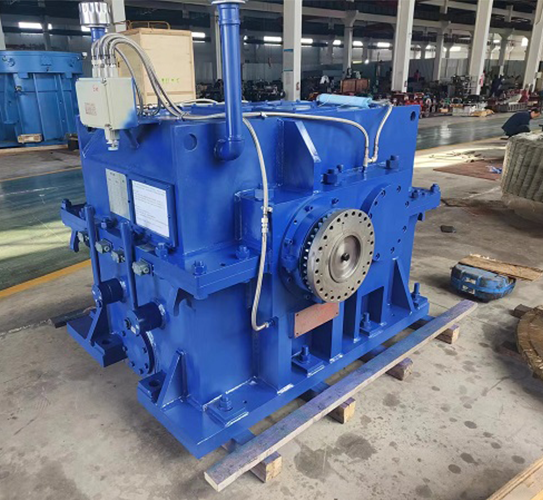
Frequently Asked Questions About Gearbox Pre-Installation Checks
Q1: Can minor shaft misalignment be ignored during installation?
No. Tiny alignment errors will be amplified during high-speed and high-load operation. Long-term misalignment will cause abnormal vibration, gear tooth eccentric wear, oil seal leakage and bearing heating failure. All alignment deviations must be corrected before installation.
Q2: Why does a new gearbox still need pre-install cleaning?
New components may produce tiny metal debris during factory testing, packaging and transportation. Residual impurities in the cavity will scratch gear surfaces and bearings after operation, forming early wear marks. Simple cleaning can effectively avoid initial mechanical damage.
Q3: How to choose the right lubricant before gearbox installation?
Choose according to operating load and ambient temperature. Low-speed and heavy-load scenarios adopt high-viscosity lubricating oil, while high-speed and light-load scenarios apply low-viscosity oil. Always follow standard ISO viscosity grades to ensure optimal lubrication and heat dissipation effects.
Q4: What risks will mismatched installation dimensions cause?
Unmatched dimensions will lead to forced assembly, resulting in shell deformation, internal gear meshing deviation and abnormal operating resistance. It will cause shifting unsmoothness, loud noise and even structural cracking in severe cases.
Copyright @2025 Nanjing Hansen High Speed Gearbox Manufacturing Co., Ltd. All rights reserved,Support by yiwaimao.cn
This website uses cookies to ensure you get the best experience on our website.
 Pусский
 العربية
 Melayu
 Tiếng Việt


 Phone
 Email


Comment
(0)